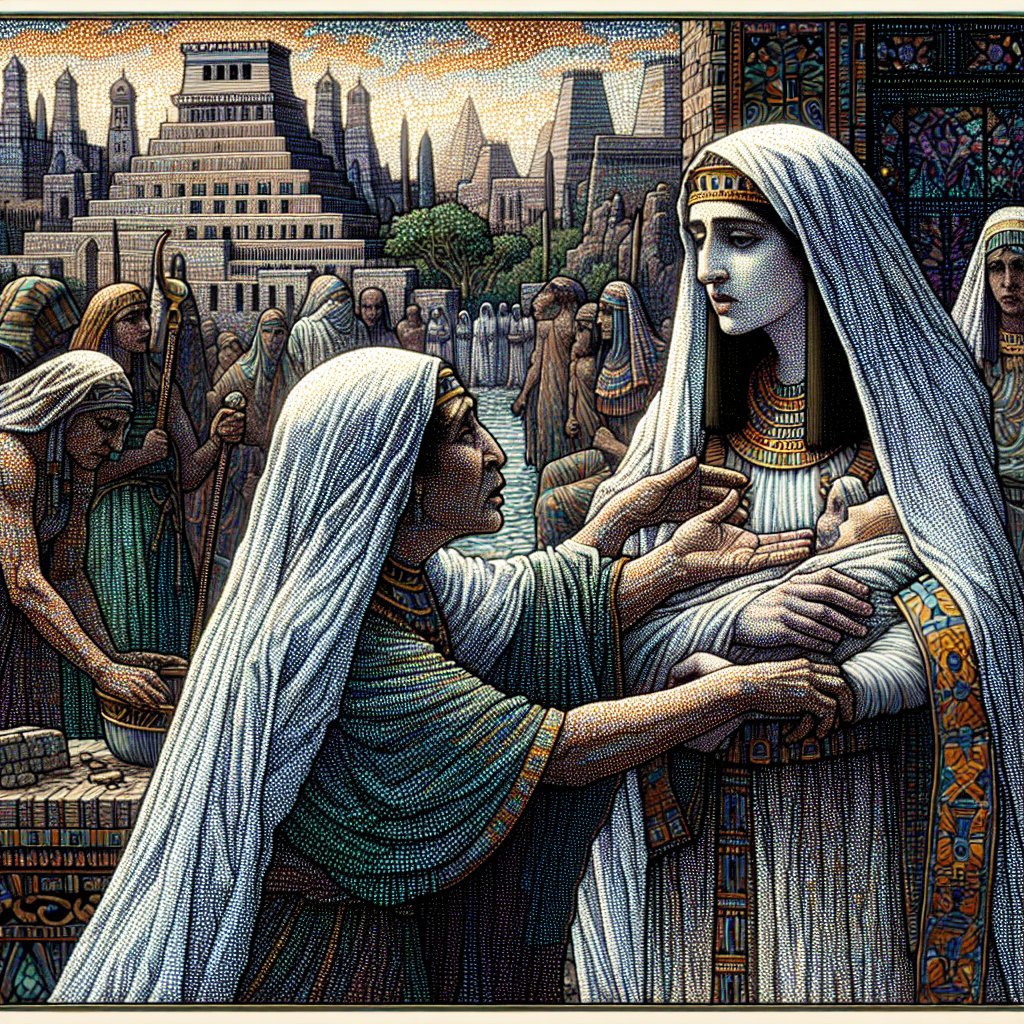
The story of the Exodus—a narrative of epic liberation, divine power, and foundational covenant—stands as one of humanity's most enduring and profoundly influential sagas. Across millennia, scholars, theologians, and philosophers have grappled with its depths, crafting rich Theological & Philosophical Interpretations of Divine Exodus that speak not only to ancient events but to perennial questions of existence, freedom, and divine nature. It’s more than just a historical account; it’s a canvas upon which humanity has projected its deepest yearnings for justice and understanding.
This isn't merely a tale of an ancient people’s escape from bondage. It’s a profound exploration of what it means to be free, what constitutes divine intervention, and how a community forms its identity through shared struggle and revelation. Let's peel back the layers of this multifaceted narrative, examining how different eras and schools of thought have illuminated its timeless wisdom.
At a Glance: Understanding the Exodus Through Different Lenses
- A Story of Liberation and Identity: The Exodus is the foundational narrative for Jewish identity, portraying God’s active intervention to free an enslaved people and establish a covenant.
- Philosophical Cornerstone (Exodus 3:14): The divine self-revelation "I Am That I Am" is a bedrock text for philosophical inquiry into the nature of God's being, timelessness, and active presence.
- Theological Evolution: Interpretations have moved from ancient Near Eastern polemic, through Psalms and prophetic re-imaginings, to Christian understandings of salvation and a new covenant.
- Modern Resonances: The Exodus continues to inspire social justice movements and philosophical debates about freedom, ethics, and the role of the divine in human history.
- Beyond Metaphysics: Contemporary thought increasingly explores postmodern and non-metaphysical readings, focusing on experience, language, and ethical implications rather than traditional ontology.
The Ancient Echo: Unpacking the Exodus Narrative's Core
Before we delve into the intricate philosophical and theological interpretations, it's essential to grasp the foundational narrative itself. This isn't just background noise; it's the very text that philosophers and theologians have wrestled with for centuries, shaping their inquiries and conclusions.
From Bondage to Covenant: The Biblical Account
The Book of Exodus unfolds with the Israelites toiling as slaves in Egypt under the oppressive hand of Pharaoh. Their cries reach Yahweh, the God of their ancestors, who chooses Moses to be His unlikely instrument of liberation. At the burning bush, Moses receives his divine commission and, crucially, God reveals His mysterious and potent name: Yahweh, often interpreted as "He Is," "I Am," or "I Will Be"—a name pregnant with ontological significance that would fuel millennia of philosophical debate.
What follows is a dramatic showdown of divine power against human stubbornness. A series of ten devastating plagues descends upon Egypt, each demonstrating Yahweh’s supremacy over the pantheon of Egyptian gods. The climax arrives with the death of the firstborn and the Passover, marking God's decisive act of judgment and protection. The miraculous Red Sea crossing then seals their escape, a pivotal moment of deliverance that becomes etched into the collective memory of Israel.
The journey through the wilderness is not without its trials, but God provides sustenance—manna from heaven and water from a rock—further cementing His active presence. The culmination of this formative journey occurs at Mount Sinai, where God establishes a covenant with His people, giving them the Law, including the Ten Commandments. This covenant doesn't just provide a moral code; it forms the very identity of Israel as a holy nation, chosen and bound to God.
Ancient Near Eastern Roots: Polemic and Identity
The Exodus narrative isn't told in a vacuum. It’s deeply rooted in the ancient Near Eastern milieu of the 13th century BCE, a period marked by powerful empires and diverse religious beliefs. Seen through this lens, the story functions as a potent theological polemic against the Egyptian deities and Pharaoh himself, who was considered divine. The plagues, far from random acts of destruction, directly targeted specific Egyptian gods, systematically dismantling their power and demonstrating Yahweh’s absolute sovereignty.
Beyond polemics, the Exodus incorporates common ancient Near Eastern motifs of journey and covenant. The journey from slavery to freedom, through a wilderness of testing, signifies a profound transformation. It’s a journey that doesn't just lead to a new land but to a new self, a new communal identity forged in shared experience and divine encounter. The covenant at Sinai, while unique in its specifics, echoes broader ancient Near Eastern treaty patterns, solidifying the relationship between God and Israel, much like a suzerain-vassal agreement.
Philosophical Foundations: When Reason Met Revelation (Exodus 3:14)
Few biblical verses have ignited as much philosophical speculation as Exodus 3:14, where God declares to Moses, "I Am That I Am" (or "I will be what I will be" in other translations). This brief, enigmatic utterance is a true locus classicus, serving as a conceptual springboard for probing the very nature of existence, divine essence, and human understanding of the ineffable.
"I Am That I Am": A Locus Classicus for Ontology
The phrase "Ehyeh-Asher-Ehyeh" in Hebrew is deliberately ambiguous, inviting multiple layers of interpretation. Is it a statement of self-subsistence? A refusal to be defined? A promise of active, enduring presence? Philosophers across the ages have found in it a profound statement about ontology—the study of being.
This divine self-designation immediately pushes beyond simple anthropomorphic descriptions of God. It points to a Being whose essence is Being itself, not contingent upon anything else. For many, it suggests timelessness, immutability, and ultimate reality. The sheer philosophical weight packed into these few words has made them central to discussions on metaphysics, the nature of God, and the limits of human language to grasp the divine.
Early Philosophical Giants: Philo, Augustine, Aquinas on Divine Being
The quest to understand YHWH's essence through Exodus 3:14 began even before the Common Era and continued robustly through the medieval period, shaping both Jewish and Christian theological traditions.
Philo of Alexandria: Allegory and Hellenistic Thought
Writing in the 1st century CE, the Jewish philosopher Philo of Alexandria was one of the earliest to engage deeply with Exodus 3:14 through a philosophical lens. Situated at the crossroads of Judaism and Hellenistic philosophy, Philo interpreted the phrase allegorically, blending biblical revelation with Platonic and Stoic concepts.
For Philo, "I Am That I Am" signified God’s absolute self-sufficiency and timelessness. God is pure Being, uncreated, unchanging, and utterly transcendent. He identified YHWH with the Platonic concept of the Good or the One, the ultimate source of all reality. God is the one who truly is, while all created things merely participate in being. Philo's interpretation moved the divine name from a functional declaration (God's presence in action) to a profound metaphysical statement about God's eternal nature.
Augustine of Hippo: Timelessness and Divine Presence
Centuries later, the towering figure of Augustine (4th-5th century CE) echoed and expanded upon these themes within a Christian framework. For Augustine, Exodus 3:14 was proof of God's immutable, eternal nature, contrasting sharply with the fleeting, changeable nature of creation. "I Am That I Am" declares God's essence as Being itself, not a being among beings.
Augustine argued that God is beyond time, experiencing all moments simultaneously. The divine name, therefore, is not merely a statement about existence but about a perfect, eternal present. This understanding profoundly influenced Christian theology, emphasizing God's transcendence and his ultimate reality as the source of all truth and being.
Thomas Aquinas: Pure Act and Self-Subsistent Being
The medieval scholastic philosopher Thomas Aquinas (13th century CE) further solidified the metaphysical interpretation of Exodus 3:14. For Aquinas, God is ipsum esse subsistens—self-subsistent Being itself. The divine name reveals God as Pure Act (actus purus), utterly without potentiality, and thus the ultimate explanation for all contingent existence.
Aquinas systematically argued that "He Who Is" is the most proper name for God because it denotes God's existence as His very essence. Unlike creatures whose existence is distinct from their essence, God is His existence. This concept formed a cornerstone of scholastic theology, establishing God as the prime mover, the uncaused cause, and the ultimate ground of all being, derived directly from the implications of Exodus 3:14.
Theological Resonances: Deliverance, Covenant, and Ongoing Presence
Beyond the ontological deep dive, the Exodus narrative pulsates with theological significance, serving as a foundational theme that reverberates throughout subsequent biblical literature and informs the core tenets of Judaism and Christianity. It's a testament to God's active involvement in human history, demonstrating His unwavering commitment to liberation and covenant.
The Psalms: A Hymnbook of Deliverance
The Psalms frequently revisit the Exodus, embedding its themes of deliverance, divine protection, and covenantal faithfulness into the very fabric of Israelite worship and memory. Psalm 105, for instance, recounts the Exodus story as a litany of God's mighty acts, celebrating His faithfulness to the covenant with Abraham, Isaac, and Jacob. It emphasizes God's power in leading His people, providing for them, and fulfilling His promises.
Psalm 77 and Psalm 78 likewise draw on the Exodus to remind the community of God's salvific deeds. Psalm 77 recalls the "wonders of old," particularly the Red Sea crossing, as a source of comfort and trust in times of distress. Psalm 78 uses the Exodus narrative as a pedagogical tool, recounting God's patience and Israel's repeated disobedience, underscoring the enduring nature of the covenant despite human failings. These poetic reflections transform the historical event into a timeless archetype of divine intervention.
Prophetic Visions: A New Exodus, a Renewed Relationship
Prophetic literature, especially from the exilic and post-exilic periods, often reinterprets the Exodus as a potent symbol of future hope and divine deliverance. When Israel faced new forms of oppression or exile, the prophets looked back to the original Exodus as a template for God’s redemptive power, envisioning a "new Exodus."
Isaiah 43:16-19, for example, speaks of God doing "a new thing," creating a way in the wilderness and streams in the desert—a clear echo of the original Exodus journey, but promising an even greater, more wondrous deliverance. Jeremiah 16:14-15 declares that in the future, people will no longer swear by "the LORD who brought the Israelites up out of Egypt," but by "the LORD who brought the Israelites up out of the land of the north and out of all the countries where he had banished them." This powerfully suggests a future liberation that will surpass even the original, solidifying the Exodus as an ongoing paradigm of God's saving activity.
Ezekiel 20 uses the Exodus narrative to portray God's persistent relationship with Israel, despite their repeated rebellions. It emphasizes God's faithfulness to His covenant, even as He leads them through judgment, always with the ultimate goal of restoring them to the land and to Himself. The Exodus, therefore, is not a static historical event but a dynamic, ongoing relationship, an enduring promise of God’s liberating presence.
The New Testament Lens: Christ as the Ultimate Fulfillment
In the New Testament, the Exodus narrative forms a foundational backdrop, providing a powerful interpretive framework for understanding salvation, deliverance, and the new covenant inaugurated through Jesus Christ.
Jesus as New Moses
The parallels between Jesus and Moses are deliberately highlighted. In Matthew's Gospel, Jesus' infancy narrative echoes Moses’ escape from Pharaoh's infanticide (Herod's decree against the children of Bethlehem). The Sermon on the Mount presents Jesus as a "new Moses" ascending a mountain to deliver a new, higher law���not to abrogate the old, but to fulfill it. This re-framing positions Jesus as the ultimate prophet, law-giver, and liberator, surpassing the foundational figure of Moses.
Red Sea to Baptism
Paul, in 1 Corinthians 10:1-4, explicitly draws an analogy between the Red Sea crossing and Christian baptism. He describes the Israelites as being "baptized into Moses in the cloud and in the sea," and eating "spiritual food" and drinking "spiritual drink" (referring to manna and water from the rock). For Paul, these were types, or foreshadowings, of Christian sacraments. The miraculous escape through water becomes a potent symbol of dying to an old life and being reborn into a new one in Christ, mirroring the transformative power of baptism.
Salvation Through Christ
Ultimately, Christian theology presents Christ as the ultimate fulfillment of the Exodus. The liberation from slavery in Egypt foreshadows the greater liberation from sin and death achieved through Christ's sacrifice. The Passover lamb, whose blood saved the Israelites, is reinterpreted as Christ, "our Passover lamb" (1 Corinthians 5:7), whose blood atones for humanity’s sins. The journey to the promised land finds its spiritual fulfillment in the journey towards the Kingdom of God, and the Sinai covenant is superseded by the new covenant established through Christ's blood, promising a direct and intimate relationship with God.
Modern and Postmodern Crossroads: Shifting Paradigms of Interpretation
The interpretive journey of the Exodus doesn't end with ancient and medieval thought. Modernity brought new critical approaches, while postmodernism has challenged traditional metaphysical assumptions, opening fresh avenues for understanding.
Beyond Metaphysics: Contemporary Philosophical Readings
In the wake of Enlightenment rationalism and the critiques of figures like Kant, many contemporary philosophers have grown wary of traditional metaphysical assertions about "Being" in the style of Aquinas. They question whether human reason can truly grasp the essence of a transcendent God or if such inquiries are merely projections of human categories onto the divine.
Contemporary interpretations of Exodus 3:14 often emphasize its relational or linguistic aspects. Instead of a statement about static being, "I Am That I Am" can be read as a promise of active presence ("I will be with you") or as a refusal to be named and controlled, highlighting God's freedom and otherness. Some postmodern thinkers might even view it as an instance of language breaking down at the limits of human comprehension, foregrounding the ineffable mystery rather than attempting to define it. The focus shifts from what God is to how God acts and relates.
Existential and Liberationist Perspectives: The Exodus as a Call to Action
Beyond the purely philosophical, the Exodus narrative has profoundly influenced ethical, social, and political thought, particularly in the 20th and 21st centuries.
Influence on Social Justice Movements (MLK)
Perhaps one of the most powerful modern interpretations is its role as an inspiration for social justice movements. The narrative of an oppressed people crying out for freedom, and a God who hears and actively intervenes, resonates deeply with communities struggling against injustice. Martin Luther King Jr. famously invoked the Exodus story, particularly in his "I've Been to the Mountaintop" speech, envisioning himself and his people standing on the precipice of a promised land of equality and justice.
The Exodus, in this context, becomes a clarion call for liberation, emphasizing God's preferential option for the poor and oppressed. It provides a theological justification for resistance against unjust systems and instills hope in the face of overwhelming power. This interpretation moves the Exodus from an ancient historical event to a living, dynamic principle for challenging oppression in any age.
Liberation theology, originating in Latin America, also draws heavily on the Exodus, viewing Christ's mission through the lens of political and economic liberation. It understands salvation not just as individual spiritual redemption but as collective freedom from systemic injustice, seeing the Exodus as a foundational paradigm for God's ongoing work in the world.
Navigating the Interpretive Landscape: Common Questions and Misconceptions
The rich and varied interpretations of the Exodus can raise complex questions. Let's address some common points of confusion and contention.
Is the Exodus purely historical or primarily theological?
This is a long-standing debate. From a purely historical-critical perspective, scholars continue to debate the historicity of many details of the Exodus as described in the Bible, given the lack of independent archaeological corroboration for a mass exodus of millions from Egypt.
However, from a theological perspective, the historicity is often less crucial than the narrative's meaning. Whether every detail occurred exactly as described or represents a stylized, polemical, or theological recounting, the truth of the Exodus lies in its profound theological message: God's active involvement in human history, His commitment to liberation, and the formation of a covenant people. The story's enduring power and influence on identity and thought affirm its theological reality, regardless of specific historical debates. It's often both: a historical event remembered and shaped through theological interpretation.
How does the portrayal of God's wrath reconcile with divine love?
The plagues and the destruction of Pharaoh's army can be challenging for modern readers, seemingly at odds with concepts of divine love and mercy. Interpretations here vary widely. Some emphasize divine justice, arguing that God's wrath is a righteous response to profound evil and oppression, a necessary act to restore balance and liberate the innocent. Others view these acts through the lens of ancient Near Eastern concepts of divine warfare, where a deity demonstrates power and fidelity to their people.
Still others might interpret these events more metaphorically, focusing on the ultimate outcome—the liberation of an enslaved people—as the overarching demonstration of God’s love and covenant faithfulness. They might argue that the 'wrath' is directed at systems of oppression rather than indiscriminately at individuals, or that the narrative serves as a stark warning against tyranny and defiance of divine will. Ultimately, reconciling these aspects involves understanding the context and the multifaceted nature of God as depicted in ancient texts.
Can secular philosophy find meaning in a sacred text?
Absolutely. While the Exodus originates as a sacred text within religious traditions, its themes are universally human: freedom, oppression, identity, leadership, law, and the search for meaning. Philosophers, even those without religious convictions, can engage with the narrative as a rich source for exploring ethical dilemmas, political theory, the nature of power, community formation, and the psychological impact of liberation.
For instance, the concept of covenant can be analyzed through social contract theory, the role of Moses as a leader examined in political philosophy, or the wilderness journey as an existential metaphor for human struggle and transformation. Secular philosophy can "bracket" the divine claims and still derive profound insights from the narrative's human dimensions, enriching our understanding of the human condition. To truly Discover the Exodus of the Gods means to explore its meaning far beyond conventional boundaries.
Synthesizing Wisdom: Crafting Your Own Understanding
The journey through the theological and philosophical interpretations of the Divine Exodus reveals a narrative far richer and more complex than a simple Sunday school lesson. It's a testament to the human capacity for inquiry, for finding profound meaning in foundational stories, and for continually re-evaluating our relationship with the divine, with others, and with the very concept of freedom.
The enduring power of the Exodus lies not in a single, definitive interpretation, but in its boundless capacity to speak to different contexts, inspire diverse movements, and provoke endless philosophical reflection. From ancient Greek-speaking Jews like Philo seeking cosmic order in its lines, to medieval scholastics like Aquinas deriving the very nature of God from its most enigmatic phrase, to civil rights leaders like MLK finding the blueprint for justice within its saga—the Exodus remains a living text.
Your own understanding will be shaped by your questions, your background, and your willingness to engage with its many layers. Do you find yourself drawn to its metaphysical implications about God’s being? Or perhaps to its ethical call for liberation and justice? Maybe it’s the psychological journey of a people finding their identity that resonates most deeply with you. The beauty is that there isn't one "correct" interpretation, but rather an invitation to engage, to wrestle, and to discover the truths that illuminate your own path.
Beyond the Page: Living the Exodus Story
Ultimately, the theological and philosophical interpretations of the Divine Exodus are not just academic exercises. They offer frameworks for understanding the world, for living ethically, and for participating in the ongoing story of liberation. The Exodus narrative reminds us that liberation is often a journey, not an instantaneous event, and that true freedom comes with responsibility—the responsibility of covenant.
It challenges us to look beyond immediate circumstances, to question oppressive structures, and to believe in the possibility of transformation. Whether you approach it as a sacred text, a historical puzzle, or a philosophical metaphor, the Exodus narrative invites you to consider what freedom truly means, what justice demands, and what it implies for your own active presence in the world. The journey continues, and the story’s echoes still call us to action.
Untuk pemahaman lebih lengkap, baca panduan utama kami: Discover the Exodus of the Gods