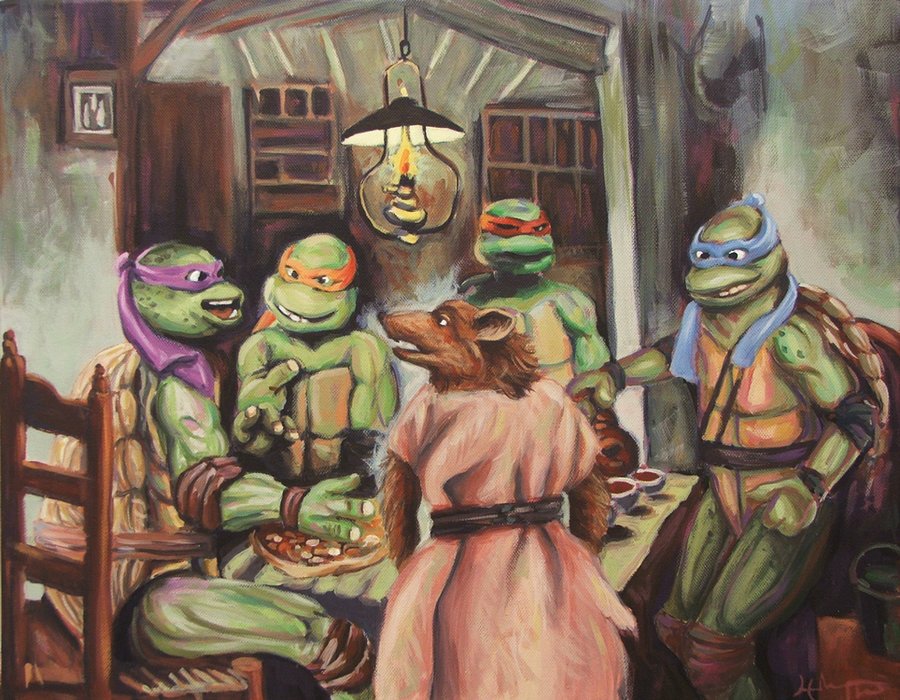
When you peel back the layers of the stories we tell today, you often find echoes of narratives as old as time itself. Modern Reinterpretations in Fiction & Pop Culture aren't just trendy updates; they're essential conversations across centuries, breathing new life into timeless tales and reflecting our ever-evolving world right back at us. From ancient myths to Shakespearean dramas, beloved fairy tales to foundational novels, these fresh takes prove that great stories never truly die—they simply evolve.
It’s more than just a new coat of paint. A modern retelling invites us to see familiar characters and plots through a contemporary lens, challenging old assumptions, amplifying previously silenced voices, and making profound connections between past and present human experiences. It’s about making the universal themes of love, power, betrayal, and destiny resonate with new generations, ensuring these narratives remain vibrant, relevant, and deeply felt.
At a Glance: Why Modern Reinterpretations Matter
- Fresh Perspectives: They challenge traditional narratives, often giving voice to marginalized characters.
- Contemporary Relevance: Classic themes are explored through the lens of modern societal issues like gender, race, and identity.
- Accessibility: Old stories become approachable and engaging for new audiences.
- Creative Freedom: Authors find innovative ways to play with established plots and characters.
- Ongoing Dialogue: Retellings keep literary and cultural conversations alive, bridging historical gaps.
- Universal Themes: They remind us that human experiences like love, ambition, and struggle are timeless.
The Enduring Appeal: Why We Keep Rewriting History
Why do authors continually return to stories already told? And why are readers so eager to pick up these "new old" tales? The answer lies in a powerful blend of creative challenge and profound connection.
For writers, reinterpretations offer a unique canvas. It’s a chance to explore "what if" scenarios within well-loved frameworks, to interrogate character motivations with modern psychological depth, or to shift entire cultural contexts. It's a creative playground where the groundwork is laid, allowing the author to focus on nuance, subversion, and fresh thematic explorations. Think of it as a dialogue with history, a way for today's storytellers to add their voice to a chorus that spans millennia.
For readers, the allure is a comforting familiarity mixed with exhilarating novelty. There's a joy in recognizing beloved characters or plot beats, even as they're twisted into something new. This balance allows for both nostalgia and discovery, inviting us to revisit cherished stories with fresh eyes and a renewed sense of wonder. It’s a chance to experience the emotional core of a classic without the potentially daunting language or outdated sensibilities of the original, making complex narratives more accessible and impactful today.
Shifting Sands: The Many Forms of Reinterpretation
Modern retellings aren't a monolith. They come in countless shapes and sizes, each offering a distinct approach to the source material. Some might simply update the time period or location, placing ancient gods in a modern high school or Elizabethan lovers in a 1920s jazz club. Others delve deeper, making minor plot adjustments that ripple through the narrative, or taking significant creative liberties that transform the original into something almost unrecognizable yet still fundamentally connected.
The magic often happens when an author focuses on a character previously relegated to the sidelines, giving them agency, voice, and an entirely new emotional arc. This often means exploring themes that were overlooked or actively suppressed in older narratives, such as feminist perspectives, LGBTQ+ themes, or examinations of social justice and inequality. These shifts don't just update stories; they often fundamentally reshape our understanding of them, making them resonate more powerfully with contemporary readers.
Mythical Makeovers: Greek Mythology Retold
Greek mythology, with its pantheon of flawed gods, epic heroes, and tragic fates, has a timeless appeal. Its universal themes of love, power, sacrifice, and destiny remain potent. Modern retellings of these myths often embark on journeys to challenge traditional narratives, frequently exploring feminist and LGBTQ+ themes and giving a voice to characters who were historically marginalized or villainized.
Madeline Miller stands out as a master of this craft. Her novel, Circe, reclaims the enchantress from The Odyssey, transforming her from a villainous temptress into a complex, resilient woman navigating solitude, power, and the complexities of divine and mortal worlds. The book offers a deeply empathetic and fresh perspective on a character once seen as merely an obstacle for Odysseus. Similarly, Miller's The Song of Achilles brings new emotional depth and a queer romance to the Trojan War, humanizing one of its best-known heroes, Achilles, and his relationship with Patroclus.
Beyond literary fiction, Rachel Smythe’s webcomic and graphic novel, Lore Olympus, transports the Hades and Persephone myth into a vibrant, contemporary setting, complete with modern technology, fashion, and social dynamics. It reimagines their often problematic origin story with a focus on consent, trauma, and love in a way that resonates deeply with modern audiences. For younger readers, Rick Riordan's beloved Percy Jackson series brilliantly sets Greek gods and heroes in the modern world, making ancient stories thrillingly accessible and relatable.
Other notable retellings include Jennifer Saint’s Ariadne, which explores the story of Theseus and the Minotaur from Ariadne’s often-overlooked perspective, shedding light on her courage and sacrifice. Pat Barker’s The Silence of the Girls offers a powerful feminist retelling of The Iliad, giving voice to the women captured and enslaved during the Trojan War. And Lauren Groff's Fates and Furies intertwines mythological elements, particularly allusions to the Fates, with a modern story of marriage, suggesting that even our contemporary lives are shaped by ancient, unseen forces.
These authors understand that the strength of these myths lies not just in their fantastical elements, but in their exploration of the human condition—themes that are ripe for re-examination through a contemporary lens. For a deeper dive into the broader cultural impact of mythological narratives, you might want to Explore the exodus of the gods and how divine figures continue to captivate our imagination across different eras.
All the World's a Stage (Again): Shakespeare Adaptations
Shakespeare's plays endure because their universal themes—love, ambition, power, betrayal, identity—and complex characters are endlessly adaptable. They are robust enough to be reinterpreted across genres like romance, fantasy, and speculative fiction, and modern adaptations frequently use them to explore societal issues and personal identity in new contexts.
Margaret Atwood's Hag-Seed is an inventive and poignant retelling of The Tempest, cleverly set within a prison literacy program. Atwood seamlessly weaves in direct quotes from Shakespeare's work, using the play's themes of illusion, revenge, and forgiveness to reflect on the nature of art, freedom, and redemption. It’s a masterclass in how to honor the original while crafting something entirely new.
Jane Smiley's Pulitzer Prize-winning A Thousand Acres reinterprets King Lear within a 20th-century Midwestern farming community, powerfully exploring themes of family, land ownership, and the insidious nature of betrayal and abuse. By grounding the epic tragedy in a domestic, realistic setting, Smiley magnifies the personal toll of Lear's mistakes.
Young adult (YA) fiction has also embraced Shakespeare with gusto. Chloe Gong's These Violent Delights reimagines Romeo and Juliet in a vibrant, dangerous 1920s Shanghai, complete with rival gangs and mysterious monsters. Melinda Taub's Still Star-Crossed picks up precisely after Romeo and Juliet's deaths, exploring the chaotic aftermath and the continuing Capulet and Montague feud, offering a nuanced look at the cycle of vengeance. Jacqueline Woodson’s If You Come Softly reinterprets Romeo and Juliet through the lens of race and class in contemporary New York City, focusing on an interracial relationship and the societal prejudices that threaten it.
Even more light-hearted takes exist, like Suzanne Harper's The Juliet Club, a contemporary rom-com set at a Shakespearean summer camp in Italy. And Emily St. John Mandel's critically acclaimed Station Eleven beautifully incorporates Shakespeare into a post-apocalyptic narrative, where a traveling theater troupe performs plays to preserve culture after a devastating pandemic, highlighting the enduring power of art in the face of collapse. These examples demonstrate that Shakespeare isn't just for dusty classrooms; his stories are vital, living foundations for contemporary storytelling.
Once Upon a Time, Reimagined: Fairy Tale Retellings
Fairy tales, in their original forms, were often dark, cautionary, and complex narratives. While Disney popularized more sanitized versions, there's been a significant resurgence of interest in their sinister, psychological roots, leading to a wave of adult-oriented retellings that challenge traditional gender roles and infuse themes of empowerment and agency.
Angela Carter's The Bloody Chamber is a seminal work in this genre, offering powerful, often visceral reinterpretations of tales like Bluebeard, Little Red Riding Hood, and Beauty and the Beast. Carter's stories strip away the saccharine layers, exposing the raw power dynamics, sexuality, and violence inherent in the originals, using them to critique patriarchal structures and explore female desire and vulnerability. Helen Oyeyemi’s Mr. Fox also brilliantly draws from the Bluebeard myth, crafting a metafictional exploration of storytelling, marriage, and danger.
Naomi Novik has become a prominent voice in modern fairy tale retellings. Her Spinning Silver is a feminist reimagining of Rumpelstiltskin, where the protagonist actively takes control of her destiny and challenges the traditional trope of a helpless maiden awaiting rescue. Similarly, Novik’s Uprooted is a Beauty and the Beast retelling that delves into psychological themes of captivity, consent, and transformation, offering a more nuanced and less romanticized examination of the original's problematic elements.
Other notable contributions include Malinda Lo’s Ash, a Cinderella retelling that emphasizes the protagonist's agency and self-reliance, critiquing the traditional notion of waiting for a prince. Instead, it explores themes of queer identity and self-discovery. Even Disney, recognizing the appetite for fresh perspectives, has embarked on a Rom-Com series that reimagines their classics, such as an untitled Mulan retelling set in the male-dominated world of private equity, where Mulan poses as her ill father to handle a crucial acquisition. These diverse approaches show that fairy tales are not just for children; they are rich psychological and cultural texts ready for sophisticated re-evaluation.
Timeless Tales, New Skins: Classic Novel Reinterpretations
The 19th-century classics, with their rich character studies and societal critiques, remain perennially relevant. Modern authors frequently reinterpret these stories to address contemporary issues like social justice, identity, and inequality, bridging the gap between historical contexts and present-day concerns.
F. Scott Fitzgerald's The Great Gatsby has seen numerous modern takes. One untitled retelling is set in Sugar Hill, Los Angeles, in the 1940s, featuring Black characters in central roles. This adaptation weaves in real historical events, such as the legal battle over racial covenants and figures like Hattie McDaniel and Lena Horne, offering a powerful commentary on race, class, and the elusive American Dream from a fresh vantage point. Another untitled retelling reimagines the story from the perspectives of three alternating female voices: Daisy Buchanan, Jordan Baker, and Catherine McCoy, as they become suspects after Jay Gatsby's murder, shifting the narrative focus to the women's agency and complicity.
Barbara Kingsolver’s Copperhead is a sprawling 500-page retelling of Charles Dickens’s David Copperfield, set in contemporary Appalachia. Through the life of Damon (Demon), Kingsolver examines institutional poverty, the complexities of foster care, child labor, the opioid epidemic, and crushing losses, making Dickens's themes of social injustice chillingly relevant to modern American society. Percival Everett's critically acclaimed James reimagines Mark Twain’s Huckleberry Finn from the perspective of the enslaved man, Jim (James). This powerful novel gives Jim agency and voice, confronting the racist undertones of the original while exploring themes of freedom, identity, and the brutal realities of slavery with historical accuracy.
Jane Austen's works, with their keen observations of social manners and romantic entanglements, are also frequent targets for reinvention. Uzma Jalaluddin’s Ayesha at Last is a delightful Muslim rom-com retelling of Pride and Prejudice, where Ayesha resists arranged marriage but finds herself drawn to Khalid, only for him to become engaged to her cousin. This adaptation deftly navigates cultural traditions with universal themes of love and self-discovery. Other upcoming retellings include an untitled modern, "spicy" rom-com retelling of Emma, featuring a sixty-something Emma in Manhattan playing matchmaker, and an untitled Sense and Sensibility family drama following sisters Jane and Celia Woodward as they move to Austin, Texas, after their father’s business scandal, injecting Austen's wit into contemporary dilemmas.
Even works like Jane Eyre and The Scarlet Letter are being re-examined. An untitled suspenseful twist on Jane Eyre shifts the power dynamic, with Jane, a broke dog-walker with a hidden identity, targeting a wealthy widower while being haunted by his late wife’s legacy. An untitled historical novel reimagines the woman who inspired Hester Prynne from Nathaniel Hawthorne’s The Scarlet Letter, blurring the lines of muse and storyteller as a Scottish seamstress navigates early 1800s Salem.
Peter Pan has also seen darker, more adult retellings. Christina Henry's Lost Boy: The True Story of Captain Hook offers a tragic version exploring Hook's origins and Neverland's moral complexities, stripping away the innocence to reveal a darker heart. Brom's The Child Thief presents a gritty, urban fantasy with horror elements, transforming Peter into a more ambiguous, dangerous figure. This highlights how retellings often peel back layers to expose the often-disturbing undercurrents of stories we thought we knew.
Perhaps one of the most poignant examples is Jean Rhys’s Wide Sargasso Sea, a prequel to Charlotte Brontë’s Jane Eyre. It tells the story of Bertha Mason, Rochester’s "mad" wife, giving her a voice and exploring themes of colonialism, identity, and mental illness, ultimately challenging the original's Eurocentric perspective and victimizing narrative. This is a powerful demonstration of how a reinterpretation can fundamentally alter our understanding of a classic.
Even in contemporary fiction, authors pay homage without direct retellings. Gabrielle Zevin's Tomorrow and Tomorrow and Tomorrow alludes to Macbeth's grief over the senselessness of death within the context of limitless video game lives, connecting a modern narrative to Shakespearean tragedy. Eleanor Catton's Birnam Wood similarly references Macbeth, evoking the power of nature and man's ambition in a modern ecological thriller. These examples showcase the subtle, pervasive influence of classic narratives on new storytelling.
Beyond the Page: Retellings in Pop Culture
While much of this discussion focuses on literature, the concept of modern reinterpretations permeates all corners of pop culture. Film, television, video games, and even stage productions constantly draw inspiration from and re-envision classic narratives. Think of the countless superhero origin stories that continually get rebooted with new social contexts, or sci-fi adaptations that bring ancient myths to the stars. The core drive is the same: to make the familiar new, to find contemporary relevance in enduring archetypes.
From the dark, gritty fantasy of The Witcher (which borrows heavily from European folklore) to the historical dramas that reinterpret real-life figures with modern psychological depth, pop culture thrives on this constant dialogue with its predecessors. It’s a testament to the power of archetypes and the human need to see ourselves reflected in the stories we tell, no matter how old their origins might be.
The Power of Perspective: Giving Voice to the Marginalized
One of the most profound impacts of modern reinterpretations is their ability to challenge traditional power structures and amplify previously silenced voices. For centuries, many classic narratives were told from a singular, often privileged, male perspective. Modern retellings consciously dismantle this, offering alternative viewpoints that shed new light on characters, events, and themes.
Consider the shift in focus from Odysseus to Circe, or from the heroes of the Trojan War to the enslaved women. These aren't just minor plot tweaks; they're fundamental reorientations that force us to question the narratives we’ve inherited. By giving agency and interiority to characters once dismissed as villains, victims, or side notes, authors perform a crucial act of empathy and historical revisionism. They allow us to see the world not just as the powerful did, but through the eyes of those affected by power.
This also extends to themes of social justice, identity, and equality. Reinterpretations of Romeo and Juliet through the lens of race or LGBTQ+ relationships aren't just about diversity; they’re about demonstrating that these universal struggles and loves exist across all identities, and often face unique challenges within specific social contexts. These adaptations make classic stories relevant by interpreting them through contemporary societal values and issues, bridging the gap between past and present in a way that resonates deeply and fosters greater understanding.
Navigating the Nuances: What Makes a Good Reinterpretation?
Not all retellings are created equal. What elevates a successful reinterpretation above a mere rehash? It often comes down to a delicate balance: respect for the source material combined with bold, thoughtful innovation.
A compelling reinterpretation doesn't just copy the plot; it understands the why behind the original story. It identifies the universal themes, the core character motivations, and the emotional resonance that made the classic endure. With this understanding, the author can then ask critical questions: What was left unsaid? Whose story was ignored? What new meaning emerges if we shift the setting, gender, or social context?
The best retellings aren't afraid to take significant creative liberties, but they do so with purpose. They offer a fresh perspective that genuinely enriches our understanding of the original, rather than simply updating it for updating's sake. They invite a dialogue between texts, prompting readers to reconsider both the new version and the classic that inspired it. This might involve deep psychological dives, sharp social commentary, or groundbreaking stylistic choices. Ultimately, a good reinterpretation leaves you feeling like you've experienced something both new and profoundly familiar, deepening your appreciation for the timeless power of storytelling itself.
The Never-Ending Story: Why Reinterpretations Will Always Be with Us
Modern reinterpretations aren't a passing fad; they are a fundamental part of how stories evolve and remain vital across generations. As societies change, so too do the questions we ask of our narratives. What was once universally accepted might now be challenged; what was once invisible can now be brought to the forefront.
These new versions ensure that our shared literary heritage doesn't become stagnant or irrelevant. They act as cultural interpreters, translating old wisdom into new languages and contexts. They invite us to engage actively with tradition, to question, to empathize, and to find ourselves within stories that have shaped humanity for centuries. In a world constantly reinventing itself, the ability to reinterpret our foundational myths and tales is not just a creative exercise—it's a testament to the enduring power of storytelling to connect us across time and experience.
Untuk pemahaman lebih lengkap, baca panduan utama kami: Explore the exodus of the gods